Lovable vs Cursor (2025): Pricing, Features, Limitations, Real Reviews + Alternative
 Written by Arystan K.
At a Glance
| Category | Lovable | Cursor |
|---|---|---|
| Primary purpose | AI app builder (full-stack generator) | AI code editor for developers |
| Skill requirement | No-code / low-code | Intermediate to advanced devs |
| Output | UI, backend, auth, hosting | High-quality code inside repo |
| Best for | MVPs, prototypes, SMB tools | Large apps, production systems |
What is Lovable?
Lovable is an AI-first application builder that converts natural-language prompts into production-ready applications. It combines prompt-driven code generation, a visual editor, built-in backend scaffolding, and instant deployment to let non-engineers ship working apps quickly.
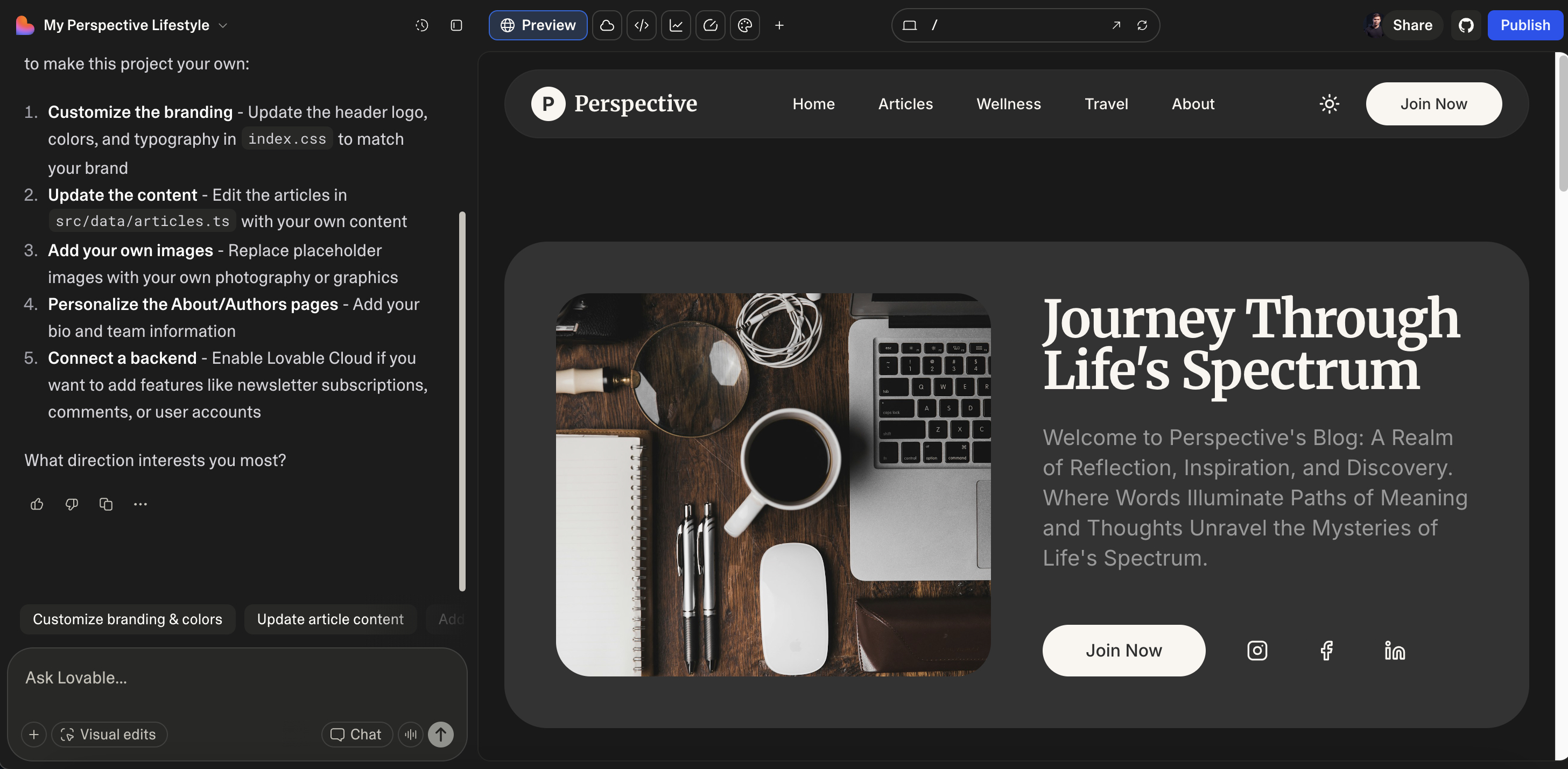
Unlike traditional no-code platforms, Lovable generates real, exportable code under the hood. This allows teams to start with a fully functional prototype and gradually evolve it toward production quality. The platform automates complex tasks such as API creation, database connections, edge functions, and state management. As a result, founders and teams launch tools dramatically faster and reduce the need for large engineering teams in early stages.
Lovable also integrates AI-powered design capabilities. It can restructure entire interfaces, rewrite app logic, or redesign UX components through conversational commands—making iteration cycles extremely short. This makes it one of the most founder-friendly app builders on the market in 2025.
Lovable — Stand-out Features
- Prompt-to-app generation (text description → full app)
- Visual drag-and-drop editor with real code under the hood
- Built-in backend, database wiring, and auth
- Instant hosting & 1-click deployment
- Real-time team collaboration
- GitHub sync for portability
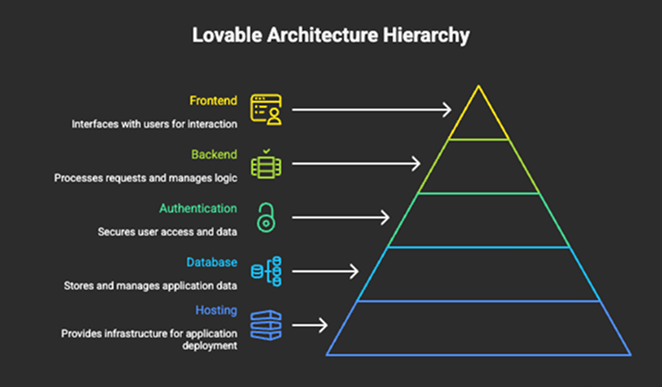
These features make Lovable a uniquely powerful builder. Its ability to translate natural-language intent into deployable software drastically cuts development cycles. Teams can refactor entire flows in minutes, experiment freely without expensive engineering overhead, and maintain momentum as new ideas emerge.
The strength of Lovable lies in its combination of AI automation and structured generation. Unlike conventional AI chat tools that produce disconnected snippets of code, Lovable produces coherent, fully wired applications with routing, data models, components, and backend logic already integrated. This allows users to focus on product thinking rather than low-level implementation.
What Lovable is Best For
Typical use cases where Lovable shines:
- Founders building an MVP fast
- SMBs transforming spreadsheets into apps
- Designers and PMs shipping interactive prototypes
- Proof-of-concept and early validation
Lovable is also ideal for rapidly testing multiple product directions. Instead of committing weeks of engineering effort to explore a new vertical or idea, teams can generate functional prototypes within hours and validate them with real users. This dramatically improves product-market fit cycles and reduces startup risk.
Furthermore, Lovable is particularly strong for workflows that rely on structured data. Internal dashboards, onboarding systems, CRMs, logistics tools, scheduling apps, and lightweight SaaS utilities can be built quickly and maintained with minimal engineering overhead.
Lovable Limitations
Important constraints to consider:
- ⚠Limited control over complex, custom logic
- ⚠AI-generated code can require manual cleanup
- ⚠Scaling large codebases may be harder
- ⚠Debugging may be more opaque compared to hand-written code
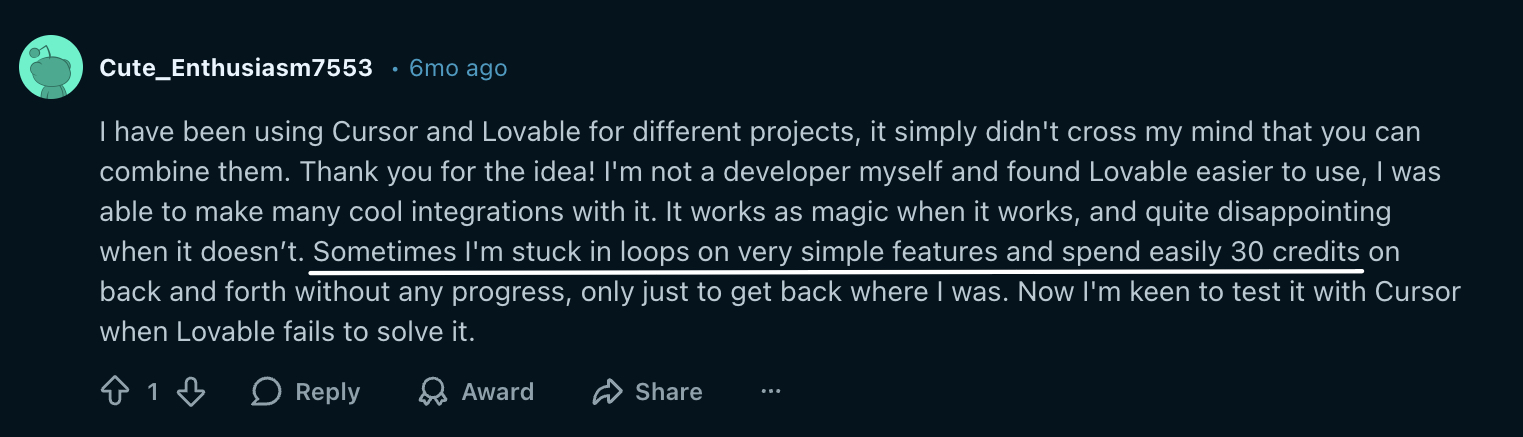
- ⚠Costs increase with heavy usage and iterations
While Lovable is exceptional for speed, it sometimes struggles with projects that demand deep architectural customization or advanced integrations. Because Lovable abstracts away much of the low-level implementation, developers may find it harder to enforce specific design patterns or granular control over system behavior.
Another important limitation is observability. Debugging issues generated by AI can lead to trial-and-error workflows, especially when logic becomes complex. In such cases, teams often export the project and transition into tools like Cursor for fine-grained control and maintainability.
Lovable Pricing & Real Costs
Lovable offers tiered subscriptions with monthly credits. Real costs depend heavily on iteration frequency, number of builds, and token-intensive operations. Community discussions warn about credits burning quickly during experimentation — see Reddit conversations here and the general subreddit r/lovable.
What is Cursor?
Cursor is an AI-powered development environment inspired by the ergonomics of Visual Studio Code but enhanced with deep contextual understanding of entire codebases. Instead of replacing coding, Cursor augments developers by accelerating writing, refactoring, debugging, and architectural reasoning. Its core strength lies in treating your project not as isolated files but as a unified, interdependent system.
Thanks to repository-wide embeddings and semantic search, Cursor can interpret relationships between components, services, dependencies, and architectural layers. This allows the AI to execute multi-file transformations while maintaining structural integrity—something traditional editors and basic AI code assistants struggle with.
Cursor also serves as a bridge between modern AI models and real-world engineering requirements. It integrates source control, documentation generation, test automation, and debugging workflows into a single interface. For engineering teams, Cursor becomes a force multiplier—reducing cognitive load, speeding up onboarding, and enabling higher throughput without sacrificing code quality.
In enterprise environments, Cursor is particularly impactful. Large teams benefit from AI-driven consistency enforcement, automated refactors across microservices, and the ability to codify engineering practices directly into prompts. This positions Cursor as a cornerstone of next-generation developer productivity stacks.
Cursor — Stand-out Features
- AI-assisted edits across multiple files
- Repository-level understanding and context
- Automated refactors, tests, and bug fixes
- Real-time code explanations and documentation generation
- GitHub integration and in-editor commits
Cursor's most powerful capability is its multi-file edit engine. Unlike standalone AI tools that operate on limited context, Cursor can rewrite entire systems—ensuring accuracy across imports, type definitions, schemas, and component boundaries. This drastically reduces the pain of large-scale changes.
Another standout feature is architectural reasoning. Cursor can infer patterns within a project, maintain stylistic consistency, and automatically align new code with existing conventions. This reduces fragmentation and improves long-term maintainability—especially in fast-moving teams.
Cursor also excels at reducing onboarding time for new engineers. By enabling AI explanations of unfamiliar modules, generating diagrams, and surfacing relationships between files, Cursor eliminates weeks of ramp-up time. This makes it ideal for scaling engineering teams or distributed organizations.
What Cursor is Best For
- Professional developers working on production systems
- Large codebases and microservices
- Refactoring and debugging legacy systems
- Teams that prioritize code quality and long-term maintainability
Cursor is invaluable when engineering organizations need to increase velocity without compromising reliability. Its ability to enforce consistent patterns and architectural standards makes it well suited for mid-size and enterprise development teams managing long-lived systems.
It particularly excels in complex refactor projects. Developers can instruct Cursor to migrate frameworks, reorganize folder structures, update APIs, or introduce new architectural layers—while the AI ensures coherence across the entire project.
Cursor is also ideal for innovation teams exploring difficult problem spaces. When building AI-enabled products, processing pipelines, or advanced integrations, the ability to offload tedious logic-writing or boilerplate creation unlocks a significantly faster iteration loop.
Cursor Limitations
Known shortcomings:
- ⚠Requires programming knowledge
- ⚠No visual UI builder
- ⚠Infrastructure (hosting, DB) must be managed separately
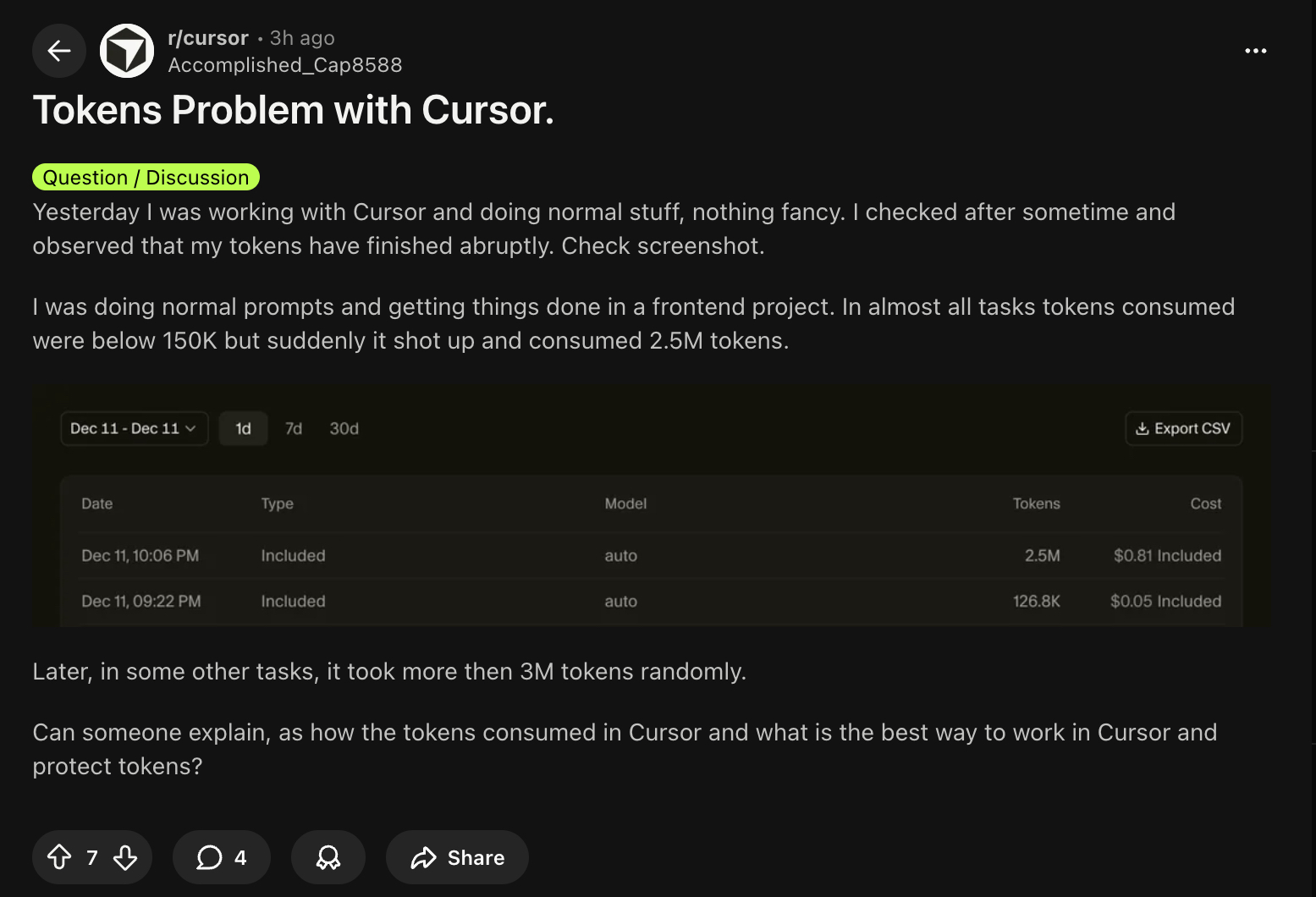
- ⚠Large repo processing can use many tokens
Cursor's power is tightly coupled with developer expertise. While it can accelerate workflows dramatically, it cannot replace foundational engineering knowledge. Teams without technical background may find Cursor overwhelming or difficult to leverage effectively.
Additionally, Cursor does not abstract infrastructure, which means teams still need to manage CI/CD pipelines, deployments, server environments, environment variables, and operational reliability. This gives maximum control but increases complexity for non-specialists.
Finally, token usage remains a practical limitation. Large repositories with thousands of files or monorepos with multiple packages require extensive embedding and context retrieval. This can lead to higher operational costs, especially during heavy refactoring or experimentation phases.
Cursor Pricing & Real Costs
Cursor uses subscription tiers and token-based usage for heavy operations. Expect higher costs when performing repo-wide rewrites, generating tests for large modules, or running repeated complex prompts. See community insights on the Cursor subreddit: r/cursor.
Pricing Comparison
| Factor | Lovable | Cursor |
|---|---|---|
| Base cost | Medium | Medium |
| Token/credit usage | High (large builds) | High (repo operations) |
| Scaling cost | High | Medium-high |
| MVP affordability | Excellent | Average |
Community and Reddit Discussions
Real-world opinions matter. The Reddit threads we referenced show a consistent pattern: builders prefer Lovable for speed and prototyping, while developers prefer Cursor for control and maintenance. Users commonly describe a hybrid workflow: build in Lovable → export → refine in Cursor.
See an example discussion: Reddit: When do you use Lovable vs Cursor?
Quick Summary Chart
Lovable — best when
- Fast MVP or prototype
- No engineering team
- UI-first workflows
Cursor — best when
- Complex architectures
- Code ownership and control
- Refactoring & debugging
Real-world Scenarios
Scenario 1 — Building an AI SaaS with Lovable
Lovable excels when a founder needs to go from idea to functional SaaS in days rather than weeks. Consider a small team building an AI-powered content generator. With Lovable, they can rapidly assemble:
- Authentication and subscription gating
- User dashboards
- Input forms for prompts
- Server actions calling OpenAI or similar APIs
- Analytics pages to track usage
Most importantly, Lovable lets them iterate extremely fast. A team can test 5–10 variations of their flow in a single afternoon without touching a traditional code editor. Once early users validate the concept, the team can export the codebase or refine specific logic manually.
Scenario 2 — Building an internal tool with Cursor
For engineering teams, internal dashboards often require deep integrations, data transformations, and reliable backend logic. Cursor is ideal here because the team can maintain full control while significantly speeding up development through AI-driven enhancements.
- Cursor writes boilerplate and CRUD logic automatically
- Engineers refine complex logic with precise prompts
- Legacy modules can be refactored quickly
- Tests, documentation, and error handling can be generated instantly
- Large architectural changes can be done using multi-file transforms
This scenario is where Cursor shines brightest. Internal tools often evolve rapidly—requirements change, data models shift, and integrations expand. Cursor allows developers to keep up with these changes without introducing technical debt or poor maintainability.
Scenario 3 — Building a data platform with Bootstr.ai
Bootstr.ai becomes the best fit when a company needs a scalable system that automates workflows, handles structured data, and integrates AI without requiring heavy devops or custom infrastructure. Unlike Lovable, Bootstr focuses on production maturity; unlike Cursor, it does not require deep engineering skills to manage operations.
- Automating data ingestion and processing workflows
- Setting up dashboards for teams and clients
- Building custom AI-driven logic within business processes
- Managing multi-role access, structured objects, and customer data
- Creating internal or external tools without maintaining servers
A typical Bootstr.ai data platform might ingest leads from multiple sources, enrich them with AI, classify them, and route them to different departments—all automatically. The team gets a central hub that operates reliably without needing a dedicated engineering staff.
Lovable, Cursor, or Bootstr?
Bootstr.ai is positioned as a practical middle ground for teams that want production-ready apps without the full operational overhead. It focuses on:
- AI-driven workflow automation
- Production-ready app scaffolding directly into GitHub
- Scalable backend & growth tools
- Easy-to-use UX for teams and founders
- Zero vendor lock-in — code lives in your repo
Key difference: Bootstr.ai generates files directly into your GitHub repository. The service orchestrates generation but never stores the files — the repo and all code belong to you from the first commit.
Conclusions
In short:
- Lovable = speed and accessibility
- Cursor = depth and control
- Bootstr.ai = production-ready structure without excessive complexity or vendor lock-in
FAQ
Build Anything. Own Everything.
Bootstr.ai is for founders, engineering teams, and agencies that want real code, full control, and a developer-native workflow. Stop prototyping inside someone else's walled garden — let AI scaffold your app into your GitHub account and continue working inside Cursor.
Need help choosing a workflow? Contact our team and we'll show you a live build into a GitHub repo.